The Brief
The Voter Network is a nonpartisan civic engagement organization working to expand participation across Kansas. They pulled together registration data for the state's 2023 and 2024 high school graduating classes and needed it designed into a report.
The audience is high school educators. The report had to show them what registration looks like in their own county, make the case that reaching students before they graduate matters, and then hand them something to do about it: how to run a registration drive, what training and data The Voter Network offers, and which partner organizations can help.
The Challenge
The content pulls in two directions. Half of it is statewide data, county by county, with a methodology section and an appendix of district-level tables. The other half is a call to action aimed at a teacher with no time, who is reading on a screen between classes.
It also had to come apart. The report goes out digitally rather than in print, and pages from it get reused as graphics in a social campaign, so individual pages needed to hold up on their own, away from the pages around them.
The Approach
The report opens on a plainly written Bottom Line before any chart shows up, so a reader who stops after one page still leaves with the argument: nationally, fewer than 30% of 18-year-olds are registered compared to 75% of voters 45 and older, and in Kansas registration swings widely from county to county and year to year.
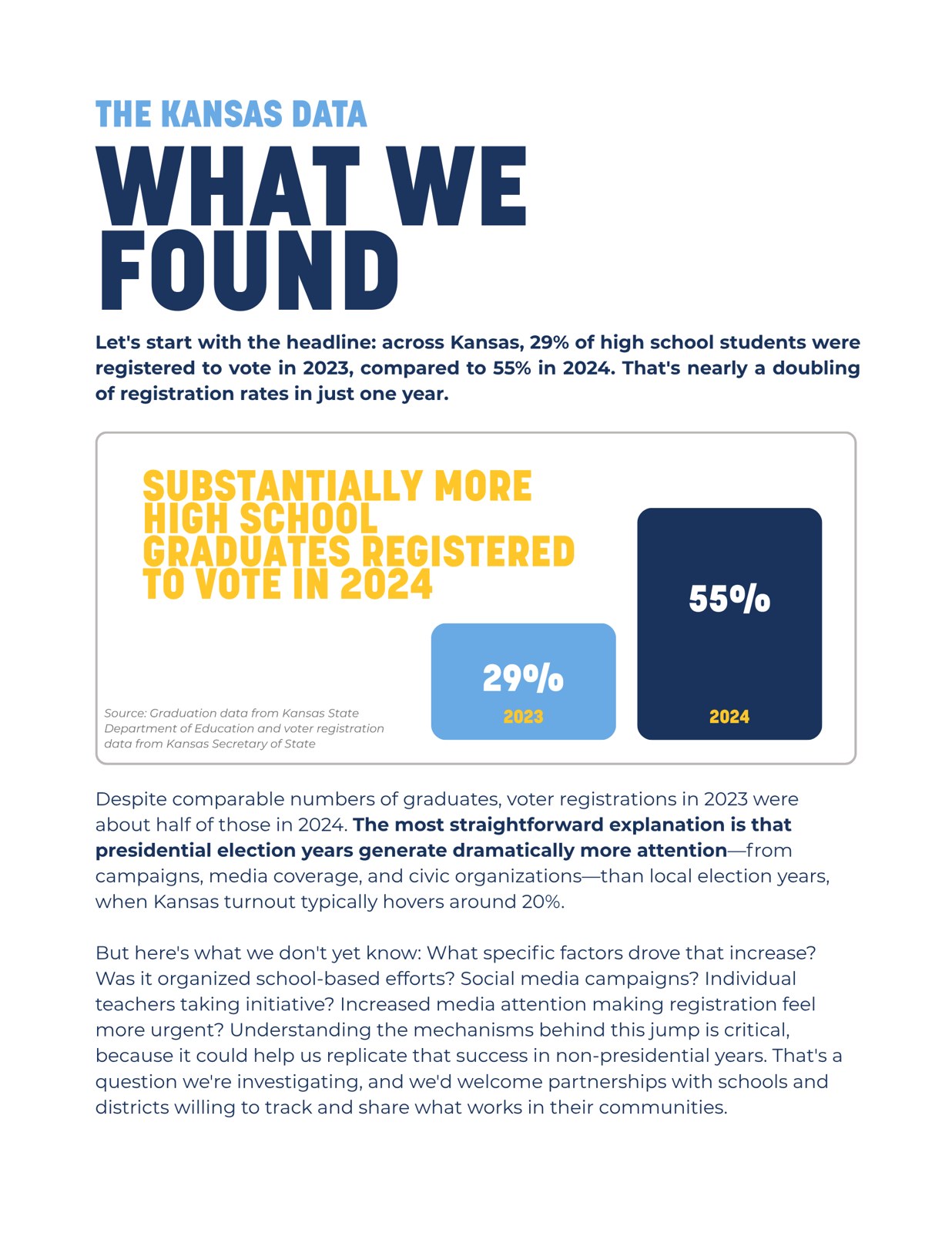
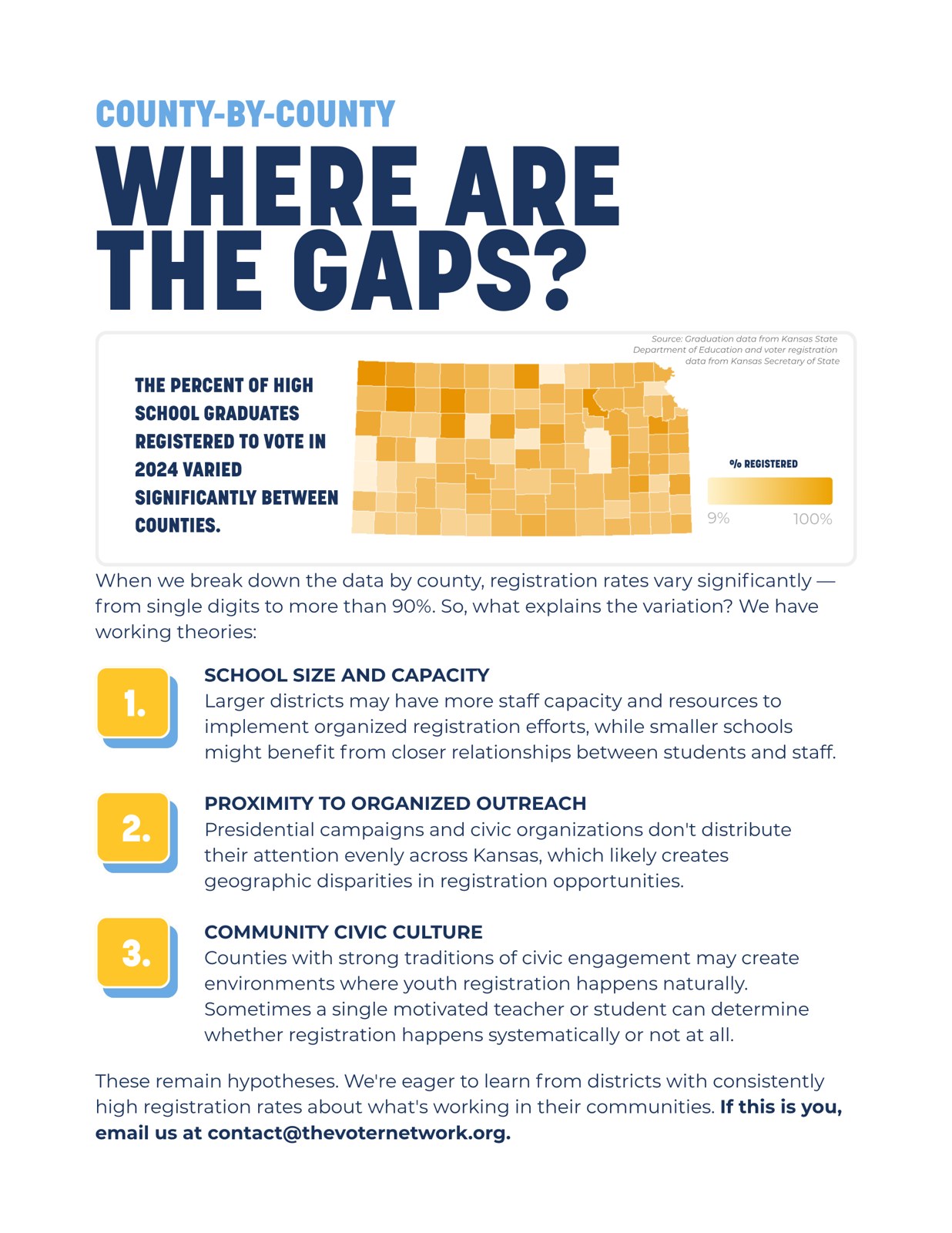
From there it works through the findings, with the statewide jump between the 2023 and 2024 classes, a county-level map of where the gaps are, and the working theories behind the variation, each stated as a hypothesis rather than a conclusion. The appendix carries the district tables for the five largest counties, so a teacher can find their own district.
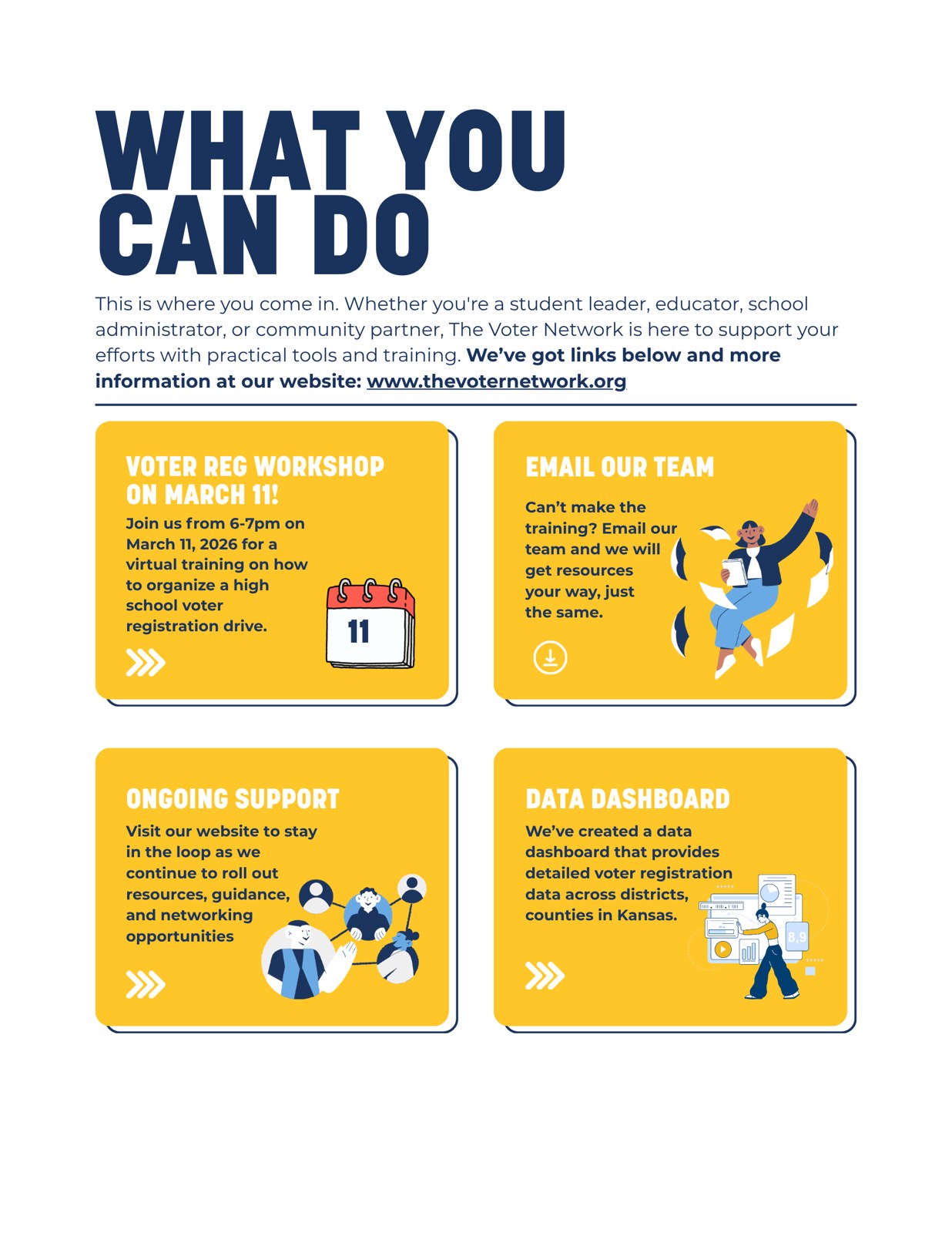
The action pages are built as cards: a training date, a contact for resources, the data dashboard, and a checklist of what a registration drive can look like in a school, from student councils to journalism classes to county election boards. Partner organizations sit alongside The Voter Network's own services rather than under them.
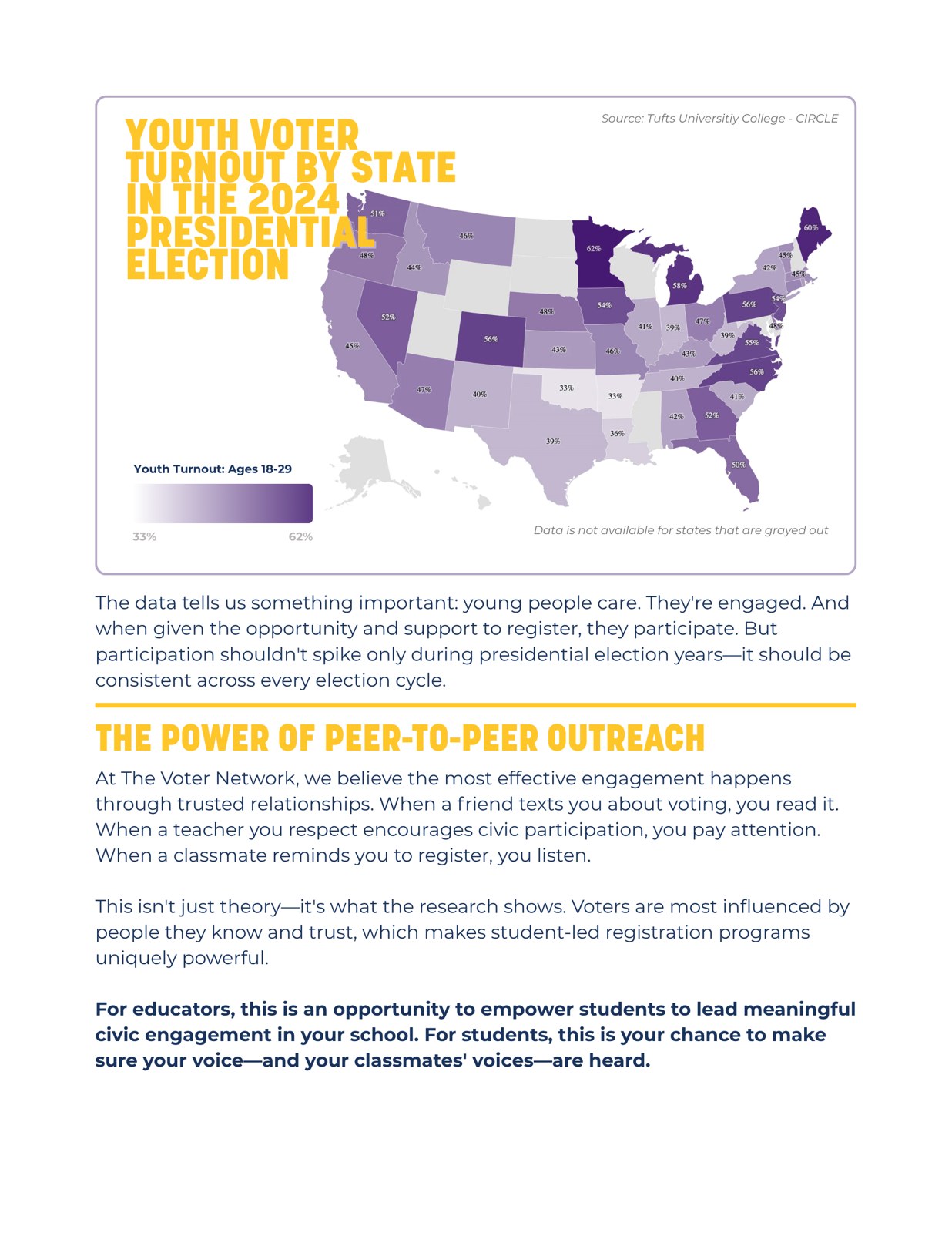
Every page is set in big type, flat brand color, and illustration, with the numbers pulled out large. That keeps it legible at phone size and means a single page can be lifted straight out of the document and posted as a graphic.

The Outcome
The finished report went out digitally to educators and administrators across Kansas, and its pages carried into a social campaign promoting the training and the registration data.